Activate
ChatGPT for Consultants: Writing Proposals That Win
The proposals that close are written in the client's language, not yours. Here's how AI-assisted proposal writing works when the right source material is in the session.
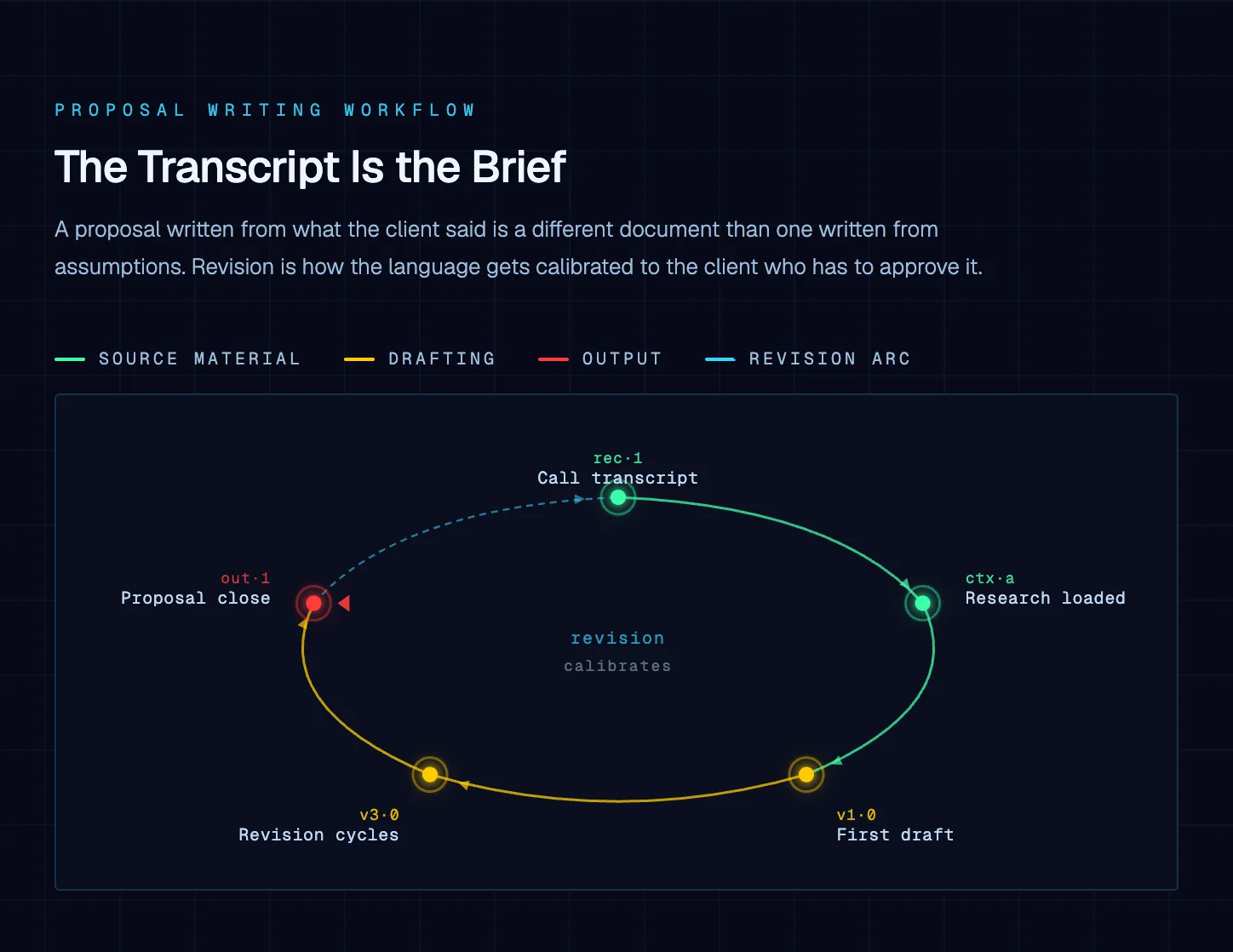
A proposal is a document about the client’s problem – described in their language, reflecting what they said they needed, structured for the audience that has to approve it.
When a client reads a proposal and feels the gap between what they said in the meeting and what appeared on the page, the proposal was written from the consultant’s perspective. What we do, how we work, what clients typically receive. That language belongs to the consultant.
AI closes that gap by finding the client’s language – from the call transcript, from the research on their organization, from the emails they sent – and making it the basis of the document.
Loading that material is activation – the captured language meeting the engine that uses it.
Two examples show what proposal writing looks like when that source material is in the session.
What Every Proposal Needs
The strongest proposals are written backward. They start from what the client said, what their organization prioritizes, and what the people approving the proposal need to hear – and work from there to the consultant’s offer.
That requires material: the call transcript where the client described the problem in their own words. Background research on their organization – their strategic priorities, recent announcements, language they use publicly. Prior proposals that show what structure and tone have worked before. And an honest read of how this client makes decisions. All of it prepared before the drafting begins.
With that material, AI produces a proposal that uses the client’s language, positions the engagement around what they specifically said they needed, and is structured for the actual approval chain they described.
Two Examples
Writing Proposals: From Cold Email to Three Revisions
A consulting firm pursued a new client through a cold outreach campaign. The prospect responded, a meeting was held, and the opportunity to submit a proposal followed.
Before any drafting began, the session was loaded with everything available: the call transcript from the initial meeting, detailed research on the prospect’s organization – their stated priorities, their frameworks, their public language – and several prior proposals the firm had written for similar engagements.
The first draft used that material to position the proposal around the client’s own stated priorities. It was reviewed, and two things became clear. The first draft was too detailed – it read like a facilitation manual, essentially giving away the methodology the firm would charge to deliver. The second draft pulled back from operational specifics and focused on outcomes: what the client would have at the end of each phase, not how each activity worked. The third draft tightened further, finding the line between demonstrating enough to be credible and protecting what the engagement was actually being paid to provide.
Three revision cycles. Each one tighter. The final proposal was a fraction of the length of the first – and more persuasive for it.
The prospect passed. A follow-up was drafted in the same session – a short message that acknowledged their decision, kept the relationship intact, and left the door open for a future conversation. The firm stayed in the prospect’s mind as a credible option rather than a failed pitch. Sales cycles are long. How a proposal ends determines whether another conversation is possible.
Writing Proposals: Language Mirroring and the Client Who Approved It
A second client came through a cold email campaign – a prospect with a longer sales cycle and a project that would require sign-off from multiple stakeholders. An initial meeting was held. The prospect described the project clearly: they had a concern about a prior experience where a large investment had been made in a physical space with no plan for how to activate it. They didn’t want that to happen again.
That sentence went into the proposal.
The proposal was built around the language the client had used to describe what they were afraid of – and positioned the consulting engagement as the specific answer to that fear. Their exact concern became the opening frame. The proposal showed that it had been heard.
The session was loaded with the meeting transcript, the email exchange leading up to the meeting, the cold email that had started the relationship, and two prior proposals from similar engagements as structural reference. The drafting process began with the transcript – every phrase the client had used to describe the project, their concerns, and their goals was noted before a single section was written.
The proposal also went through two revision cycles. The first draft was too prescriptive – it positioned the firm as the expert who would lead the client through a defined process. The second draft shifted the language to collaborative and provisional: “we might explore,” “depending on what we find,” “in partnership with your team.” The revision reflected how the client had described the relationship they were looking for.
The proposal was approved.
What Both Examples Share
Capture the call. The transcript is the proposal brief. In both cases, the most valuable source material was what the client said in the initial meeting. Their language, their concerns, their framing of the problem. A proposal written from that material is a different document than a proposal written from the consultant’s assumptions about what the client needs.
Revision Is the Work. Both proposals went through multiple drafts. The first draft is the starting point that shows where the language is right and where the positioning needs to shift. Three drafts is the process.
The line between demonstrating value and giving it away is where proposals are won or lost. The first example found that line through revision – pulling back from methodology to outcomes. The second found it through tone – pulling back from authority to collaboration. That calibration is specific to each client and cannot be templated. It requires enough context in the session about who is reading the proposal and what they are looking for.
Related Reading
The meeting transcript that becomes the proposal brief starts with a recording – AI meeting notes covers how client conversations become source material before they become documents.
Proposals often begin with email outreach – ChatGPT for emails covers how organizational voice and client language carry through from the first cold email to the follow-up after the call.
The data your organization has on a prospect changes what the proposal can say – ChatGPT for data analysis covers how research on a client’s organization surfaces the language and priorities that belong in the proposal.
Want to See This in Your Business?
Each proposal becomes the next one’s reference. The language that landed becomes structural memory. The body of work compounds across pitches.
Book a 30-minute AI Discovery Call where we audit the proposals your business is currently writing – and the source material that could make them land differently. No deck, no pitch, no obligation.